 Chat with us

Call us now :08045803032
 Send Inquiry
 Send Inquiry
Manual Polarimeter
Manual Polarimeter Specification
- Focus System
- Manual focusing knob
- View Head
- Monocular, fixed position
- Features
- Durable cast iron base, scale vernier, and smooth rotating mechanism for precise readings.
- Spare Parts
- Supplied with sodium lamp and fuse as spares
- Theory
- Measures the optical rotation of substances, useful in the analysis of optically active compounds.
- Drawtube
- Monocular
- Sensor
- Optical sensor for manual reading
- Resolution
- 0.01° (minimum scale division)
- Interface
- Manual (no digital interface)
- Focal Distance
- Fixed for standard tube lengths up to 220 mm
- Magnification
- 6x (in built-in telescope eyepiece)
- Dimensions
- Approx. 500 mm (L) x 170 mm (W) x 220 mm (H)
- Focus Range
- Manually adjustable focus
- Eyepieces
- One (monocular)
- Eyepiece Tube
- Fixed, suitable for single observation
- Illumination
- Built-in sodium lamp
- Coarse Adjustment Range
- 0° to 360°
- Fine Adjustment Range
- 0.01°
- Working Stage
- Sample chamber with tube holder
- Image Format
- Visual scale readout (no digital image)
- Interpupillary Distance
- Not adjustable (single eyepiece)
- Objective Achromatic
- Glass optical system
- Light Source
- Low-voltage sodium lamp
- Temperature Range
- Ambient laboratory conditions (not thermostat controlled)
- Accuracy
- 0.02
- Sample Tube Diameter
- Up to 22 mm
- Calibration
- Factory calibrated, user adjustable
- Minimum Reading
- 0.01
- Power Supply
- AC 220V/50Hz
- Sample Tube Length Compatibility
- Up to 220 mm
- Scale Type
- Circular scale with vernier
- Weight
- Approx. 7.5 kg
- Usage
- Suited for educational, research, and quality control laboratories
Manual Polarimeter About
Our polarimeter P1000-LED is used by numerous companies and institutes for basic lab applications and training, for example the experiment on saccharose inversion. It measures the optical rotation according to the half-shade principle, and the measurement results are read through an eyepiece and two noniuses.The P1000-LED features a sample chamber for tubes with a length of up to 220 mm, a polariser and an analyser. A high-performance LED is used as the light source whose ser vice life is up to 2000 times longer than that of conventional sodium discharge lamps the device therefore re quires only little maintenance and is very cost-effective. A high-quality metal stand and a pivoted cover make the equipment complete.The scope of delivery for the P1000-LED includes a 100 mm and a 200 mm measurement tube with a debubbler for the proper filling.This simple, analogue device can also be validated. The sample chamber is adapted to receive our quartz control plates for the calibration and adjustment.
Accurate Optical Rotation Measurement
This manual polarimeter offers precise measurement of optical rotation, crucial for analyzing optically active compounds in labs. With a circular scale vernier and a minimum reading of 0.01, it ensures repeatable, reliable results. Its 0.02 accuracy supports demanding applications in quality control and research settings.
Designed for Versatility and Ease of Use
Accommodating sample tubes up to 220 mm long and 22 mm in diameter, the instrument features a user-friendly monocular view and a smooth, manual focus system. Its built-in sodium lamp illumination and rugged cast iron base provide the stability and clarity necessary for extended laboratory usage.
FAQs of Manual Polarimeter:
Q: How do I operate the manual polarimeter for accurate measurements?
A: To operate the manual polarimeter, place your prepared sample tube in the chamber, adjust the manual focus using the knob, and rotate the vernier scale to achieve the clearest visual reading. The sodium lamp provides consistent illumination, and the scale allows fine adjustments in 0.01 increments. Calibration can be verified and adjusted by the user as needed.Q: What types of samples can the manual polarimeter analyze?
A: This polarimeter is designed to measure the optical rotation of optically active substances, such as sugars, chemicals, and pharmaceuticals. It is suitable for solutions contained in tubes up to 220 mm in length and 22 mm in diameter, making it versatile for a range of applications in laboratories.Q: When is recalibration necessary, and how can I adjust the instrument?
A: The polarimeter is factory calibrated but may require recalibration if frequent or long-term use causes drift, or when analyzing highly sensitive samples. Users can perform recalibration using standard reference substances and follow the manufacturers instructions for scale adjustment, ensuring ongoing measurement accuracy.Q: Where can the manual polarimeter be used most effectively?
A: Its robust construction and ambient temperature operation make it ideal for educational, research, and industrial quality control laboratories. It does not require a controlled thermostat environment, but should be operated in stable laboratory conditions for best results.Q: What is the process for focusing and obtaining a reading?
A: Insert the sample tube, use the manual focus knob to clarify the field, and adjust the rotating vernier scale until the boundary line (light-dark interface) is sharply defined. The optical sensor assists with visual precision, while the scale provides a direct, non-digital degree reading.Q: How does the monocular design benefit laboratory work?
A: The fixed monocular eyepiece and 6x magnification offer a straightforward observation experience and minimize user adjustments. This ensures fast setup and reduces operator fatigue during repetitive analyses, making it practical for busy lab workflows.Q: What are the main advantages of using this manual polarimeter?
A: Its combination of durable construction, fine scale precision, user-adjustable calibration, and reliable sodium lamp illumination delivers dependable results without the complexity of digital interfaces. Supplied spares and robust support from Indian distributors add further value for laboratories across educational, research, and industrial sectors.
Tell us about your requirement

Price:
Quantity
Select Unit
- 50
- 100
- 200
- 250
- 500
- 1000+
Additional detail
Mobile number
Email

More Products in Analytical Instruments Category
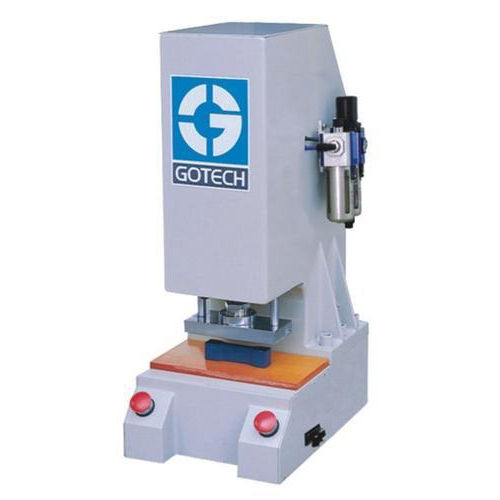
Auto Pneumatic Cutter Press
Sensor : Not applicable.
Interface : Pneumatic air inlet, User control panel.
View Head : Not applicable.
Theory : Other, Auto Pneumatic Cutter Press designed for precision cutting of various materials using pneumatic pressure.
Resolution : High cutting precision, typically 0.1 mm.
Dimensions : Approx. 500 mm x 350 mm x 600 mm (L x W x H)

Scanning Electron Microscope (SEM)
Sensor : Highsensitivity solid state detector
Interface : USB 3.0 / Ethernet
View Head : Digital display, monitor output
Theory : Other, Scanning electron microscopy (SEM) uses a focused electron beam to scan the surface of a specimen, producing highresolution images by detecting secondary or backscattered electrons.
Resolution : 3.0 nm at 30 kV
Dimensions : Approx. 620 x 700 x 800 mm (W x D x H)
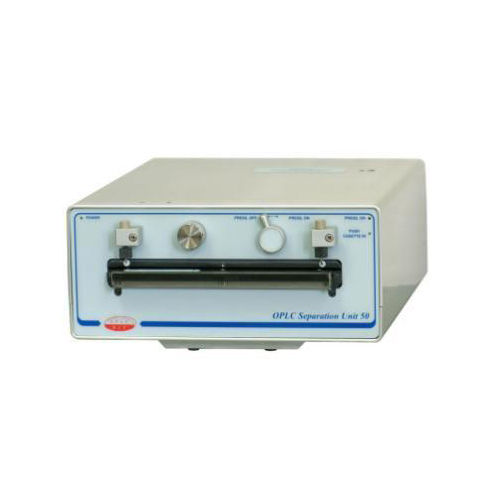
Over Pressured Layer Chromatography (OPLC)
Sensor : No sensor integrated; detection typically via external detectors.
Interface : Manual controls, with connections for pumps and detector output.
View Head : Not applicable.
Theory : Other, Planar chromatographic technique performed under external pressure to enhance separation efficiency.
Resolution : Micron level, depends on layer and mobile phase parameters.
Dimensions : Approx. 620 mm (L) x 420 mm (W) x 300 mm (H).
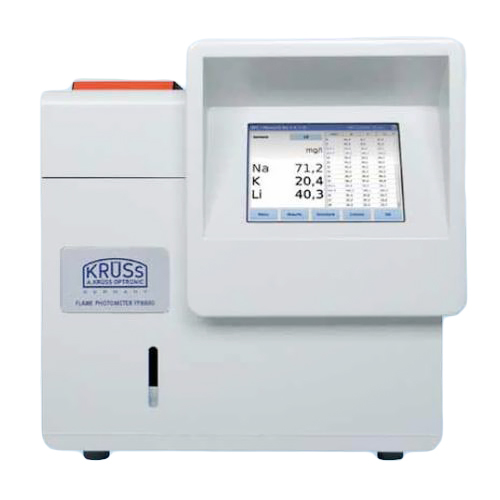
Digital Flame Photometer
Sensor : Photodetector for emission measurement.
Interface : Digital display with analogue output option.
View Head : Digital panel meter.
Theory : Other, Measures concentration of sodium, potassium, lithium, and calcium ions using emission spectroscopy.
Resolution : Up to 0.1 ppm for sodium & potassium.
Dimensions : Approx. 420 x 300 x 170 mm.

 Send Inquiry
Our Products


Office No. 253, 2nd Floor, Udyog Bhavan, Sonawala Road, Goregaon East, Mumbai - 400063, Maharashtra, India

Mr. Rajendra Barabde
(Director)
Mobile :08045803032
 Send Inquiry
 Send SMS
Developed and Managed by Infocom Network Private Limited.
