 Chat with us

Call us now :08045803032
 Send Inquiry
 Send Inquiry
Digital Flame Photometer
Digital Flame Photometer Specification
- Features
- Simple operation, direct digital reading, safety flame monitoring, stable flame design.
- Spare Parts
- Nebulizer, air filter, capillary tube, and burner head.
- View Head
- Digital panel meter.
- Focus System
- Factory set.
- Theory
- Measures concentration of sodium, potassium, lithium, and calcium ions using emission spectroscopy.
- Drawtube
- Not applicable for this instrument.
- Sensor
- Photodetector for emission measurement.
- Resolution
- Up to 0.1 ppm for sodium & potassium.
- Interface
- Digital display with analogue output option.
- Frame Rate
- Not applicable.
- Focal Distance
- Fixed, internal optical system.
- Magnification
- Not applicable.
- Dimensions
- Approx. 420 x 300 x 170 mm.
- Focus Range
- Factory set, not user adjustable.
- Eyepieces
- Not applicable.
- Eyepiece Tube
- Not applicable.
- Illumination
- Flame generated by LPG and air mixture.
- Coarse Adjustment Range
- Not applicable.
- Fine Adjustment Range
- Not applicable.
- Working Stage
- Sample aspiration unit.
- Still Image Capture Resolution
- Not applicable.
- Video Capture Resolution
- Not applicable.
- Image Format
- Not applicable.
- Interpupillary Distance
- Not applicable.
- Objective Achromatic
- Not applicable.
- Condenser
- Not applicable.
- Light Source
- Flame (combustion of LPG/air or natural gas/air).
- Display
- 312 digit LED Digital display
- Measurement Range
- Na: 0-100 ppm, K: 0-100 ppm, Li: 0-100 ppm (varies per model)
- Repeatability
- 2% relative at dilute solutions
- Sample Introduction
- Aspiration via capillary (suction) tube
- Gas Requirement
- LPG/Natural gas, dry, dust-free compressed air (5-6 liters/minute)
- Safety
- Automatic gas cut-off for flame failure
- Power Supply
- 230V AC 10%, 50/60Hz
- Linearity
- 2% up to full scale
- Calibration
- 2-point calibration (zero and span)
- Warm-up Time
- Approx. 10 minutes
Digital Flame Photometer About
Flame Photometer is widely used in various industrial labs and institution for determination sodium, potassium, calcium and lithium concentrations. Apart from this, photometer can be used to determine the concentration of certain metal ions like sodium, potassium, lithium, calcium and cesium etc. Further, photometer is designed and manufactured by using cutting-edge technology and available in various technical specifications as per the specific requirement of our value customers. This Flame Photometer is known for their unique features like high performance, durability, flawless finish and accurate reading.
Efficient Ion Measurement
Engineered for laboratories, this Digital Flame Photometer measures sodium, potassium, and lithium ions from 0 to 100 ppm. The instruments emission spectroscopy method ensures accuracy, while digital readings allow quick and convenient data interpretation. Its built-in safety features and sturdy construction make it suitable for regular and demanding analysis tasks in various applications.
Intuitive Operation and Rapid Setup
The photometer is remarkably straightforward to operate, requiring approximately 10 minutes for warm-up. With 2-point calibration for zero and span adjustment, users can expect consistent precision. Sample introduction via a capillary suction tube offers hassle-free use, while the digital interface aids both beginners and experts in daily laboratory operations.
Responsive Safety Mechanisms
Equipped with an automatic gas cut-off system, the instrument prioritizes user safety during flame operation. The stable flame design is enhanced by the use of clean, dry LPG or natural gas and compressed air. Regular maintenance is supported by easy access to spare parts, including the nebulizer and air filter, ensuring long-term performance.
FAQs of Digital Flame Photometer:
Q: How does the Digital Flame Photometer determine ion concentrations?
A: The instrument utilizes emission spectroscopy, where a flame created by LPG or natural gas excites sodium, potassium, or lithium ions in the sample. The resulting light emissions are detected by a photodetector, and the concentration is displayed directly on the digital panel.Q: What is the process for preparing and introducing samples?
A: Samples are introduced via a capillary (suction) tube. You simply aspirate the sample into the flame using the built-in sample aspiration unit, ensuring the liquid is suitable and filtered for best results.Q: When should calibration be performed on the photometer?
A: Calibration should be carried out before each measurement session using 2-point calibration (zero and span), especially if you have changed samples, gases, or after routine maintenance, to guarantee precise readings.Q: Where can the instrument be used, and what power supply does it require?
A: The Digital Flame Photometer is suitable for laboratory environments needing reliable ion analysis. It operates on a 230V AC 10%, 50/60Hz power supply, common in India and compatible labs worldwide.Q: What safety features are provided during operation?
A: The unit includes an automatic gas cut-off, which shuts off the gas supply if flame failure is detected, minimizing risk during use.Q: How does the photometer benefit laboratory analysis processes?
A: With its direct digital readings, high repeatability (2%), and rapid warm-up, the device streamlines testing routines, providing quick and consistent results. Its simple interface and stable flame system enhance efficiency and reliability for routine lab operations.Q: What are the recommended spare parts and routine consumables?
A: Commonly needed spare parts include the nebulizer, air filter, capillary tube, and burner head. Regular replacement of these components ensures optimal instrument performance and longevity.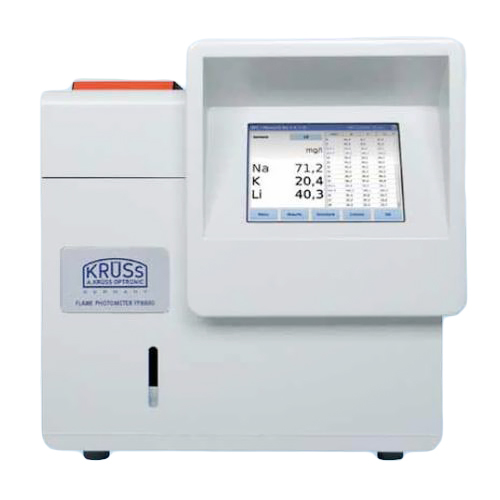
Tell us about your requirement

Price:
Quantity
Select Unit
- 50
- 100
- 200
- 250
- 500
- 1000+
Additional detail
Mobile number
Email

More Products in Analytical Instruments Category
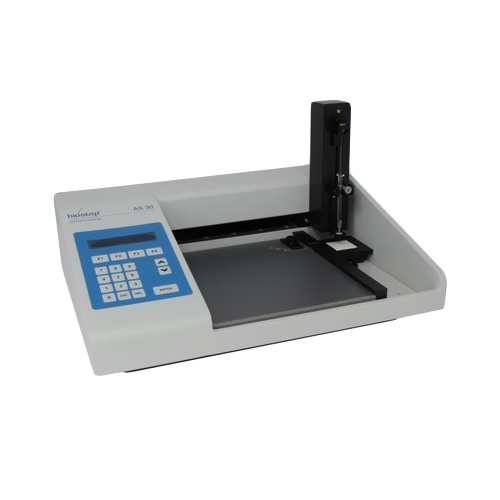
HPTLC Applicator
Sensor : Precision XYZ programmable movement system.
Dimensions : Approx. 450 x 320 x 250 mm.
Theory : Other, Automated application of samples in bands or spots on TLC/HPTLC plates for qualitative and quantitative analysis.
Interface : Touch screen control panel and USB interface for PC connectivity.
Resolution : Spot positioning accuracy 0.1 mm.
Features : Automated programmable application, high reproducibility, userfriendly interface, multiple sample tracks, solventresistant construction, and compatible with all HPTLC plates.
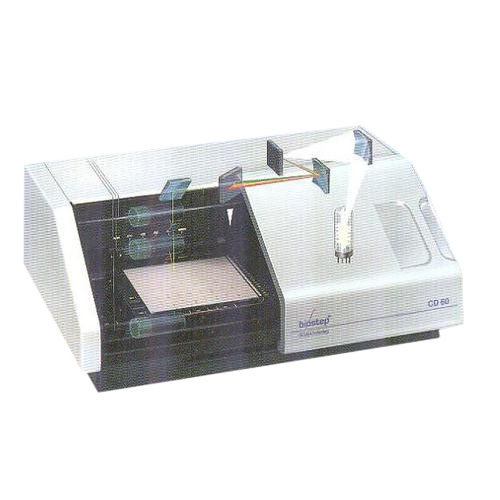
HPTLC Densitometer
Sensor : Highsensitivity CCD/CMOS sensor for precise detection
Dimensions : Approx. 400 (W) x 560 (D) x 320 (H) mm
Theory : Other, HighPerformance Thin Layer Chromatography (HPTLC) densitometry is based on measuring the amount of light absorbed or reflected by a sample strip separated on a chromatographic plate, providing quantitative analysis.
Interface : USB 2.0/3.0, Ethernet
Resolution : Up to 4800 dpi optical, 0.1 AU photometric resolution
Features : Softwareintegrated quantitative evaluation, automated plate scanning, easy calibration, multiwavelength support, userfriendly UI

Manual Polarimeter
Sensor : Optical sensor for manual reading
Dimensions : Approx. 500 mm (L) x 170 mm (W) x 220 mm (H)
Theory : Other, Measures the optical rotation of substances, useful in the analysis of optically active compounds.
Interface : Manual (no digital interface)
Resolution : 0.01 (minimum scale division)
Features : Durable cast iron base, scale vernier, and smooth rotating mechanism for precise readings.
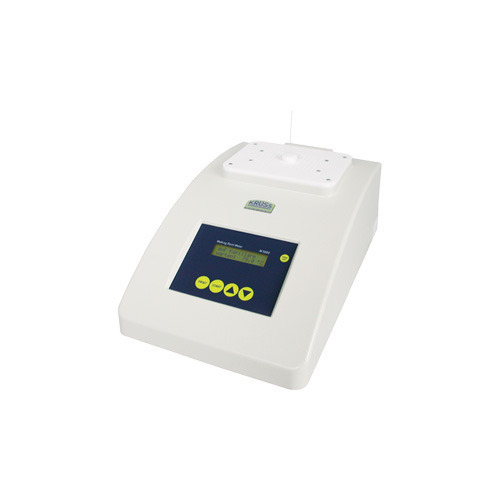
Melting Point Analyzer
Sensor : Precision temperature sensor (PT100)
Dimensions : 220 x 160 x 130 mm (LxWxH)
Theory : Other, Capillary method with observation through magnifying lens
Interface : Digital LCD display with keypad operation
Resolution : 0.1C
Features : Auto heating rate control, audible alert at melt, rapid cooling, compact design, user calibration

 Send Inquiry
Our Products


Office No. 253, 2nd Floor, Udyog Bhavan, Sonawala Road, Goregaon East, Mumbai - 400063, Maharashtra, India

Mr. Rajendra Barabde
(Director)
Mobile :08045803032
 Send Inquiry
 Send SMS
Developed and Managed by Infocom Network Private Limited.
