 Chat with us

Call us now :08045803032
 Send Inquiry
 Send Inquiry
Over Pressured Layer Chromatography (OPLC)
Over Pressured Layer Chromatography (OPLC) Specification
- Focus System
- Not applicable.
- Features
- Uniform eluent flow, high reproducibility, rapid separation, closed system to avoid solvent evaporation, compatible with various detectors.
- View Head
- Not applicable.
- Spare Parts
- Seals, pressure lines, replacement glass plates, pump heads.
- Theory
- Planar chromatographic technique performed under external pressure to enhance separation efficiency.
- Drawtube
- Not applicable for this chromatographic equipment.
- Sensor
- No sensor integrated; detection typically via external detectors.
- Resolution
- Micron level, depends on layer and mobile phase parameters.
- Interface
- Manual controls, with connections for pumps and detector output.
- Frame Rate
- Not applicable.
- Focal Distance
- Not relevant for this instrument.
- Magnification
- Not applicable.
- Dimensions
- Approx. 620 mm (L) x 420 mm (W) x 300 mm (H).
- Focus Range
- Not applicable.
- Eyepieces
- Not applicable.
- Eyepiece Tube
- Not applicable.
- Illumination
- Not included; visualization by external UV lamp or chemical spraying.
- Coarse Adjustment Range
- Not applicable.
- Fine Adjustment Range
- Not applicable.
- Working Stage
- Supports glass plate, standard 200 x 200 mm or custom sizes.
- Still Image Capture Resolution
- Depends on external imaging system.
- Video Capture Resolution
- Depends on external imaging system.
- Image Format
- No direct imaging; chromatograms visualized via external devices.
- Interpupillary Distance
- Not applicable.
- Objective Achromatic
- Not applicable.
- Condenser
- Not applicable.
- Light Source
- External UV or white light source as per detection requirement.
- Solvent Capacity
- Reservoir capacity varies-typically 100-500 mL.
- Cleaning and Maintenance
- Easy assembly/disassembly for cleaning; replaceable seals.
- Compatible Plate Size
- Commonly 200 x 200 mm silica gel-coated glass plates.
- Accessories
- Optional: heating block, automated applicator, solvent delivery system.
- Chromatogram Visualization
- Supports UV detection plates or post-development staining.
- Pressure Regulation
- Manual or electronic pressure control available.
- Temperature Range
- Ambient to 60C.
- Pump Type
- External high-pressure liquid chromatography pump (not included).
- Sample Application
- Manual spotting or automated applicators supported.
- Max Operating Pressure
- Up to 50 bar (725 psi).
- Power Supply
- Depends on external equipment used; chamber does not require power.
- Material of Construction
- Stainless steel chamber and fittings, chemical-resistant seals.
- Safety Features
- Pressure relief valve and secure lid lock.
Over Pressured Layer Chromatography (OPLC) About
HTSorbcolumns from M/s. JC Scientific Co., Ltd.,permit many kinds of analyses with a wide array of sample types. Depending on the sorbent phase, fast, innovative separations may be obtainedwith crude or purified samples.
OPLC(Over Pressured Layer Chromatography) is a planarchromatography technique that is well adapted to high throughput screening andsemi-preparative applications. It uses a forced flow of eluent at a constantand programmed flow rate delivered across a flat sorbent bed on which 50 barspressure is applied. This approach provides a number of significant benefitsincluding:
- High chromatographic resolution and efficiency with excellent reproducibility
- Reduced sample preparation or even no sample prep allowing analysis of crude and complex mixtures
- High quantity/volume sample loading (up to 10x as much as HPLC)
- Up to 96 samples separated in parallel in a single run in off-line mode and 8 samples in on-line mode
- Complete visualization of eluted and non-eluted compounds
- Easy method development by monitoring separation progression in real time
- On-line detection to provide semi-prep capabilities and hyphenation to all HPLC detectors including UV/Vis, DAD, ELSD, MS, RMN, Fluorescence etc.
- Off-line detection with densitometry or other off-line detection techniques such as DAR or PIT
- Easy scale-up from analytical to semi preparative scale up to 200 mg loading
- Fast separation (5 to 20 min per run) at programmed flow rates between 1 L/min and 10 mL/min resulting in less diffusion
- Enhanced 2D capabilities to fingerprint sample content more easily
- Inexpensive disposable and re-usable columns and 10 to 1000x less mobile phase consumption than HPLC
Typicalapplications of OPLC include the separation and purification at the 0-200 mgscale of compounds of pharmacological interest from natural products orreaction mixtures coming from organic synthesis, parallel synthesis,combinatorial chemistry, medicinal chemistry, catalysis to the discovery of newactive substances and the optimisation of leads, bioautographic analyses tospeed up research of active substances such as new antibiotics and antifungals, high performance preparative separation for NMR to compensate for lowsensitivity, determination of impurities in pharmaceutical products (QC),cleaning validation of manufacturing vessels to reduce idle time by a factor ofup to 30, in-process purity control, development of new manufacturing processes,isolation of metabolites and drug screening in biological fluids, extraction ofcompounds from complex matrices (explosives, cosmetics ) with minimal samplepreparation and many more.
M/s.JC Scientific Co., Ltd., Hong Kongprovides a broadrange of instrumentation and stationary phases for OPLC, including:
Personal OSU 50 Purification Unit : Aseparation chamber that contains a pressurized stationary phase for theseparation. The stationary phase can be reused several tens to several hundredtimes. The mobile phase can be delivered to the chamber via any HPLC pump,making this unit ideal for the chromatographer who wants to incorporate thetechnique into existing instrumentation in the most efficient and costeffective manner for on-line analysis without risking clogging expensive HPLCcolumns and without changing the user habits since the OSU 50 behaves as anHPLC column. This instrument can be used off-line by stopping the flow beforethe fractions elutes.
Otherinstruments to spot samples at high throughput, spray reagents automatically and reproduciblyand detect the separated substances are alsoavailable. Finally a broad variety of columns for OPLC, including normal phasesilica, reverse phase and a number of polar phases including amino, diol,cyano, chiral and ion exchange is available from M/s.JC Scientific Co., Ltd.,. Hong Kong.
The combinationof the reasonable investment, the low price of the columns and theirreusability in on-line mode, the consumption of eluent up to several 100 timesas low as in HPLC and the possibility to separate crude and complex samples ofvarious origins, position OPLC as a tool that complements HPLC, TLC and FlashChromatography to realize certain types of separations more quickly and moreeconomically.
Advanced Separation with Over Pressured Chromatography
OPLC enhances chromatographic separations by applying external pressure, ensuring fast, high-resolution results. This technique reduces solvent consumption and evaporative loss, making it more sustainable and reproducible compared to conventional TLC or open-chamber methods. The closed stainless steel chamber is designed for durability and chemical stability.
User-Friendly Design and Versatile Configuration
Engineered for easy operation, OPLC accepts standard 200 x 200 mm plates and features manual controls for precise pressure regulation. The chamber supports both manual spotting and automated sample applicators, while straightforward assembly and disassembly facilitate routine cleaning and maintenance.
Practical Laboratory Integration
Compatible with common HPLC pumps and suitable for solvent reservoirs up to 500 mL, OPLC systems integrate seamlessly into modern laboratories. Chromatogram visualization is supported via external UV detection or post-run staining, and optional accessoriessuch as heating blocksexpand versatility.
FAQs of Over Pressured Layer Chromatography (OPLC):
Q: How do I operate an OPLC system, and which sample application methods are supported?
A: Operation involves loading the silica gel-coated glass plate, arranging the solvent system, and setting the desired pressure using manual or electronic controls. Both manual spotting and automated applicators are supported for flexible sample introduction, enabling easy adaptation to laboratory workflows.Q: What are the benefits of using OPLC compared to conventional TLC?
A: OPLC delivers faster separations with superior resolution, thanks to uniform pressure-driven eluent flow. Its closed design limits solvent evaporation and provides high reproducibility, while compatibility with various detectors and external visualization systems enhances analytic capabilities.Q: When should I opt for OPLC in laboratory analysis?
A: Choose OPLC when higher separation efficiency, rapid analysis, or enhanced reproducibility is required. It is especially advantageous for complex mixtures where traditional TLC may fall short on resolution or when solvent use must be minimized.Q: Where can I obtain spare parts or compatible accessories for OPLC systems in India?
A: Spare seals, pressure lines, replacement glass plates, and pump heads are available from authorized distributors and suppliers across India. Accessories like heating blocks or automated applicators can also be sourced via these channels.Q: What is the process for cleaning and maintaining the OPLC equipment?
A: The chamber is designed for quick assembly and disassembly, facilitating easy cleaning. Chemical-resistant, replaceable seals help maintain system integrity, and routine inspection ensures long-term reliability.Q: What precautions and safety features are integrated into the OPLC design?
A: A built-in pressure relief valve prevents excessive pressure buildup, while a secure lid lock maintains safe operation at high pressures. The closed chamber also minimizes operator exposure to solvents.Q: How can I visualize and document chromatograms after OPLC runs?
A: Chromatograms can be visualized using UV detection plates or by applying post-development stains. Documentation relies on external imaging systems, such as digital cameras or scanners, since the OPLC chamber itself does not have integrated imaging features.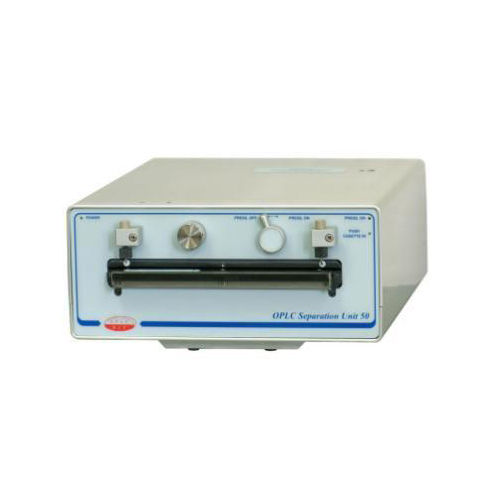
Tell us about your requirement

Price:
Quantity
Select Unit
- 50
- 100
- 200
- 250
- 500
- 1000+
Additional detail
Mobile number
Email

More Products in Analytical Instruments Category
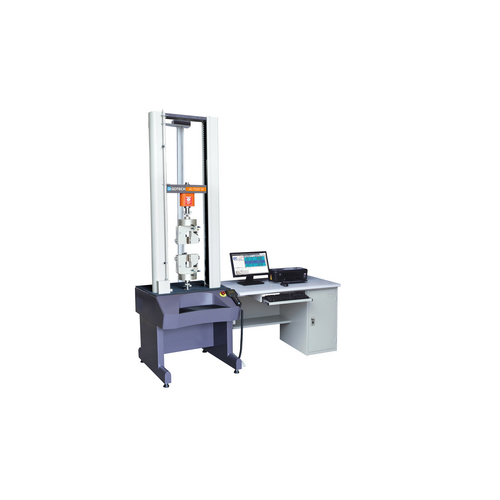
Tensile Universal Testing Machine
Features : Digital display, programmable test cycles, overload protection, emergency stop.
Working Stage : Rigid platform for specimen mounting, adjustable height.
Interface : Digital interface with USB and RS232 connectivity.
Spare Parts : Standard set includes jaws, grips, and fixtures for different test types.
Theory : Other, Used for testing tensile strength, compression, bending and shearing properties of various materials such as metals, plastics, rubbers, and components.
Dimensions : Approx. 700 mm x 600 mm x 1800 mm (may vary by model).
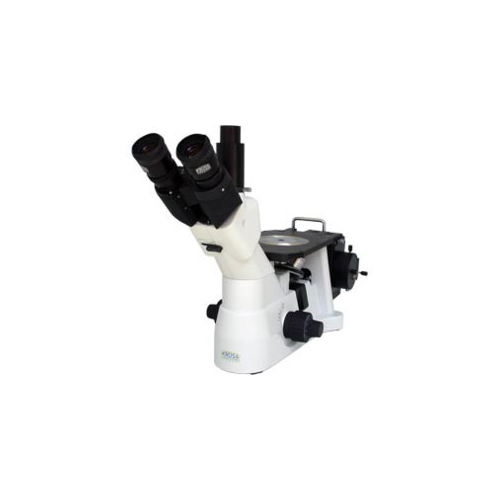
Metallurgical Microscope
Features : Antifungal coating, dustproof body, heavy cast iron base, vibrationfree design
Working Stage : Mechanical stage, size approx. 135mm x 140mm, moving range 75mm x 50mm
Interface : Camera port (Cmount adapter supported), USB (with compatible camera attachment)
Spare Parts : Eyepieces, objectives, halogen bulb, fuse, stage clips
Theory : Other, Inverted metallurgical microscopy leveraging reflected light optics for examination of opaque and polished metal surfaces.
Dimensions : Approx. 410mm x 270mm x 400mm (LxWxH)
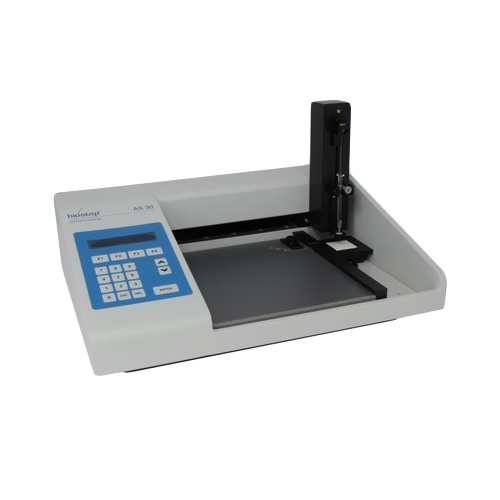
HPTLC Applicator
Features : Automated programmable application, high reproducibility, userfriendly interface, multiple sample tracks, solventresistant construction, and compatible with all HPTLC plates.
Working Stage : Adjustable plate stage to accommodate plate sizes up to 20 x 20 cm.
Interface : Touch screen control panel and USB interface for PC connectivity.
Spare Parts : Spare syringes, power adapter, and stage holders.
Theory : Other, Automated application of samples in bands or spots on TLC/HPTLC plates for qualitative and quantitative analysis.
Dimensions : Approx. 450 x 320 x 250 mm.

Manual Polarimeter
Features : Durable cast iron base, scale vernier, and smooth rotating mechanism for precise readings.
Working Stage : Sample chamber with tube holder
Interface : Manual (no digital interface)
Spare Parts : Supplied with sodium lamp and fuse as spares
Theory : Other, Measures the optical rotation of substances, useful in the analysis of optically active compounds.
Dimensions : Approx. 500 mm (L) x 170 mm (W) x 220 mm (H)

 Send Inquiry
Our Products


Office No. 253, 2nd Floor, Udyog Bhavan, Sonawala Road, Goregaon East, Mumbai - 400063, Maharashtra, India

Mr. Rajendra Barabde
(Director)
Mobile :08045803032
 Send Inquiry
 Send SMS
Developed and Managed by Infocom Network Private Limited.
