 Chat with us

Call us now :08045803032
 Send Inquiry
 Send Inquiry
Shoe Flexing Tester
Shoe Flexing Tester Specification
- Features
- Sturdy construction, adjustable flexing angle, cycle counter, sample holder for various shoe sizes, compact design
- Spare Parts
- Flexing clamps, motor, counter, operating handle (depending on model)
- Theory
- The Shoe Flexing Tester evaluates the flexing resistance of shoe soles and finished shoes by simulating repeated flexing during walking to assess durability and physical properties.
- Interface
- Manual Operation
- Dimensions
- Approx. 800 x 410 x 500 mm (varies by manufacturer)
- Working Stage
- Up to 4 pairs of shoes/soles per cycle (varies by model)
- Sample Capacity
- 4 pairs of shoes/soles at once [specific model-dependent]
- Speed
- 60-300 cycles per minute (variable as per requirement)
- Material
- Mild Steel with powder coated finish
- Temperature Range
- Ambient (Optional cold chamber available)
- Safety Features
- Emergency stop switch, protective cover
- Test Standard
- Conforms to SATRA, ISO, ASTM, or equivalent standards
- Application
- Suitable for leather, synthetic, sports, and industrial safety footwear testing
- Weight
- Approximately 80~100 kg
- Flexing Angle
- 0 - 90 (adjustable as per test method)
- Cycle Counter
- Digital, up to 99,999 cycles
- Environment
- Recommended to place on a level and vibration-free surface
- Model
- Shoe Flexing Tester (Ross/McKay/Bennewart type, varies by standards)
- Clamp Type
- Interchangeable clamps for different shoe sizes, soles, and complete footwear
- Power Supply
- 220V AC, 50/60Hz (standard)
Shoe Flexing Tester About
This Shoe Flexing Tester is enormously used to measuring the resistance of shoes and determines the fatigue durability and service life of shoes by simulating the walking state of a person. These testers are manufactured under the guidance of our skilled professionals by using innovative technologies as per the set quality norms. Apart from this, tester is enormously tested by our quality experts on different aspects before delivering to our valued customer ends. Further, this Shoe Flexing Tester is known for their unique features like excellent flexing frequency, high performance and reliable functioning.
Technical specification
| Flexing angle | 0~55 |
| Flexing frequency | 230 10 cpm adjustable |
| Grip | 4 sets |
| Counter | LCD0~99,999,999 selectable |
| Dimension WDH | Main unit:15988140 cm |
| Weight | 560kg |
| Power | 1AC 220V50Hz,5A (Specified by user) |
Advanced Flexing Simulation
The Shoe Flexing Tester comes equipped with adjustable flexing angles (0-90) and variable speed settings, allowing for precise simulation of real-world walking movements. This capability ensures thorough evaluation of sole and upper material durability for both raw materials and completed footwear.
Versatile Capacity and Compatibility
With sample holders capable of accommodating up to 4 pairs of shoes or soles at once, and interchangeable clamps to fit various shoe sizes and types, this tester is suited to diverse testing requirementsfrom casual sneakers to sturdy industrial safety boots.
Rigorous Standards Compliance
Aligning with international standards such as SATRA, ISO, and ASTM, the tester assures users of reliable, globally recognized results. The inclusion of a digital cycle counter (up to 99,999 cycles) and safety mechanisms like an emergency stop switch provide both performance and operator assurance.
FAQs of Shoe Flexing Tester:
Q: How does the Shoe Flexing Tester operate for footwear testing?
A: The Shoe Flexing Tester simulates repeated flexing motions similar to walking, using adjustable angles and speeds. Samples are clamped securely, and the machine initiates a set number of cycles (up to 99,999), continuously flexing the shoes or soles to assess their durability and resistance to wear.Q: What types of footwear and materials can be tested on this machine?
A: This tester is designed for a broad range of footwear, including leather, synthetic, sports, and industrial safety shoes or soles. Its interchangeable clamps accommodate different sizes and types, making it suitable for both finished footwear and separated sole samples.Q: When should a flexing resistance test be conducted on shoes or soles?
A: Flexing resistance tests are typically performed during product development, quality assurance, or product certification phases. Its recommended for manufacturers before market release or when evaluating changes in materials or design.Q: Where is the Shoe Flexing Tester best installed for optimal performance?
A: To ensure accurate and stable testing, the Shoe Flexing Tester should be placed on a level, vibration-free surface within a laboratory or quality control area. The ambient temperature is standard, with an optional cold chamber if low-temperature testing is required.Q: What is the process for setting up a test on the Shoe Flexing Tester?
A: Install the footwear or soles using the appropriate clamp, select the desired flexing angle and cycle speed, and set the required number of cycles on the digital counter. Once prepared, initiate the test and monitor as needed, utilizing the emergency stop if necessary for safety.Q: How does using the Shoe Flexing Tester benefit footwear manufacturers and suppliers?
A: Regular use of this tester helps companies assess the flexing endurance and durability of their products, supporting quality assurance and compliance with global standards. It aids in reducing returns, increasing customer satisfaction, and maintaining a reputable product line in the footwear market.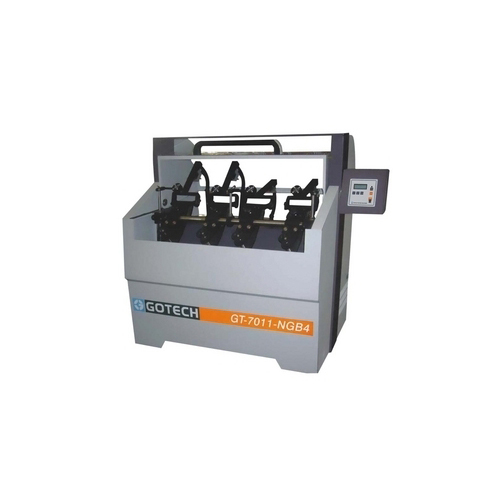
Tell us about your requirement

Price:
Quantity
Select Unit
- 50
- 100
- 200
- 250
- 500
- 1000+
Additional detail
Mobile number
Email

More Products in Analytical Instruments Category
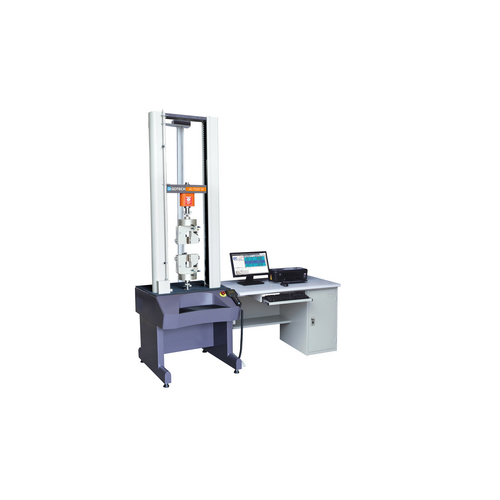
Tensile Universal Testing Machine
Sensor : Highprecision load cell for force measurement.
Theory : Other, Used for testing tensile strength, compression, bending and shearing properties of various materials such as metals, plastics, rubbers, and components.
Interface : Digital interface with USB and RS232 connectivity.
Working Stage : Rigid platform for specimen mounting, adjustable height.
Dimensions : Approx. 700 mm x 600 mm x 1800 mm (may vary by model).
Resolution : 0.01 mm crosshead displacement, 1/10,000 force resolution.
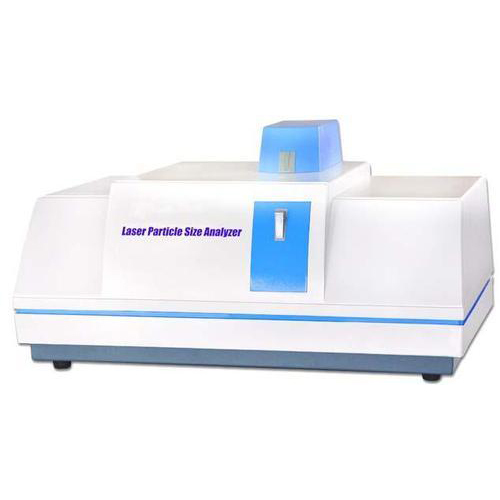
Particle Size Analyzer
Sensor : HighSensitivity CMOS
Theory : Other, Laser Diffraction Principle
Interface : USB 3.0, HDMI
Working Stage : Doublelayer Mechanical Stage (140 x 140 mm)
Dimensions : 410 x 330 x 520 mm
Resolution : 0.01 m
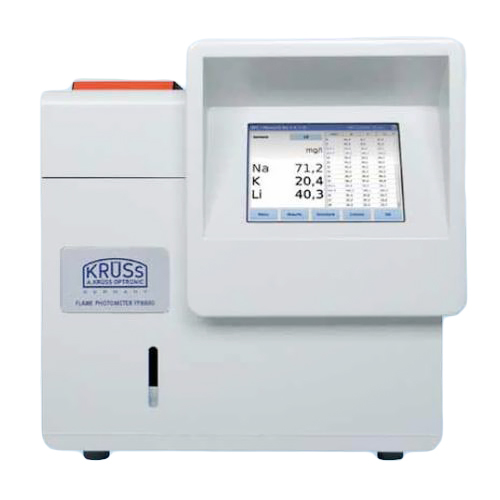
Digital Flame Photometer
Sensor : Photodetector for emission measurement.
Theory : Other, Measures concentration of sodium, potassium, lithium, and calcium ions using emission spectroscopy.
Interface : Digital display with analogue output option.
Working Stage : Sample aspiration unit.
Dimensions : Approx. 420 x 300 x 170 mm.
Resolution : Up to 0.1 ppm for sodium & potassium.
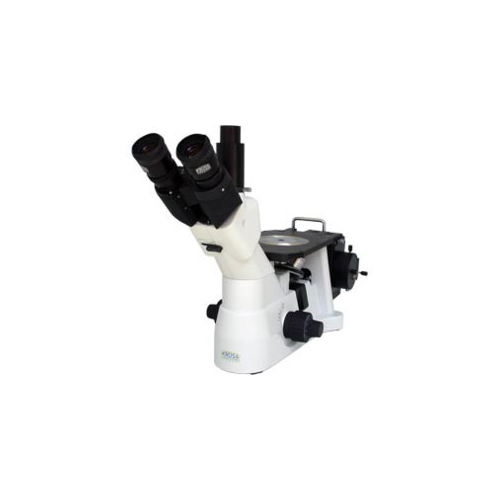
Metallurgical Microscope
Sensor : Compatible with digital cameras (optional integration)
Theory : Other, Inverted metallurgical microscopy leveraging reflected light optics for examination of opaque and polished metal surfaces.
Interface : Camera port (Cmount adapter supported), USB (with compatible camera attachment)
Working Stage : Mechanical stage, size approx. 135mm x 140mm, moving range 75mm x 50mm
Dimensions : Approx. 410mm x 270mm x 400mm (LxWxH)
Resolution : Optical: up to 2000x (dependent on eyepiece/objective used)

 Send Inquiry
Our Products


Office No. 253, 2nd Floor, Udyog Bhavan, Sonawala Road, Goregaon East, Mumbai - 400063, Maharashtra, India

Mr. Rajendra Barabde
(Director)
Mobile :08045803032
 Send Inquiry
 Send SMS
Developed and Managed by Infocom Network Private Limited.
