 Chat with us

Call us now :08045803032
 Send Inquiry
 Send Inquiry
Ion Chromatography
MOQ : 1 Number
Ion Chromatography Specification
- Features
- High sensitivity, multi-ion detection, automated eluent preparation, sample auto-sampler compatibility, integrated digital control, modular design.
- Spare Parts
- Columns, suppressors, sample loops, tubing sets, eluent bottles, pumps.
- Theory
- Ion Chromatography is a process used for separating ions and polar molecules based on their charge properties. It is widely used for water analysis, pharmaceutical, chemical, and food industries.
- Sensor
- Conductivity Detector, UV/VIS Detector, or Electrochemical Detector based on system configuration.
- Resolution
- Typically 0.001 mg/L (1 ppb) depending on detector and method applied.
- Interface
- RS232, USB, LAN, with options for data export.
- Dimensions
- Approx. 450mm x 360mm x 500mm (WxDxH)
- Software Control
- Proprietary Chromatography Data System (CDS); GLP/GMP compliant
- Environmental Conditions
- Ambient temperature 10-35C; Humidity <85%
- Power Supply
- 110-240V, 50/60Hz
- Operational Modes
- Isocratic and Gradient elution
- Column Type
- Anion and/or Cation Exchange Columns
- Operating Pressure
- 0-35 MPa (0-5000 psi)
- Application Areas
- Water & environmental analysis, food & beverage, pharmaceuticals, chemical manufacturing, clinical research
- Flow Rate Range
- 0.001 to 10.0 mL/min, adjustable
- Display
- 7-inch Color LCD Touchscreen panel
- Eluent Degassing
- Built-in or external degasser available
- Sample Injection Volume
- 5-500 L (standard options)
- Safety Features
- Leak sensors, pressure monitoring, auto-shutdown on error
- User Calibration
- Automated calibration routines
- Detection Range
- 0.001 mg/L to 1000 mg/L
- Pump System
- Dual piston, high-precision, low pulsation pump
Ion Chromatography About
Ion Chromatography instrument employs use of ion exchanger for separation of ions & polar molecules from sample. It is known to be perfect for use with proteins, amino acids, & nucleotides. This instrument has ability to detect organic salts, cations, anions, & proteins for having excellent sensitivity. It is completely automatic in nature and assures high reliability. Ion Chromatography device offered by us works on principle of separating molecules in accordance with charges present on their surface.
Features:
- Completely automatic in nature
- Ergonomic structural configuration
- User-friendly operation
Versatile and High-Precision Chromatography
Designed for both anion and cation exchange, this ion chromatography system employs dual-piston pumps for ultra-precise flow control and minimal pulsation. Adjustable flow rates and broad injection volume ranges enable compatibility with a wide array of sample types. Its robust construction and modularity make it adaptable for diverse analytical needs, while built-in eluent degassing ensures consistent performance.
Powerful Software and Touchscreen Interface
Operate and monitor your analyses effortlessly using a vibrant 7-inch color LCD touchscreen, integrated with a proprietary, GLP/GMP-compliant Chromatography Data System (CDS). Automated calibration routines and digital controls streamline setup and reduce manual effort, while seamless USB, LAN, and RS232 connectivity facilitate data export and remote system management.
Exceptional Safety and Reliability
This system incorporates advanced safety features, including leak sensors, pressure monitoring, and automatic shutdown in case of system faults. Its high operating pressure (up to 35 MPa) and user-friendly interface ensure secure day-to-day usage, even in intensive laboratory settings. Built-in or external eluent degassers further safeguard performance and analytical integrity.
FAQs of Ion Chromatography:
Q: How does the dual-piston pump enhance ion chromatography performance?
A: Dual-piston pumps deliver a stable, low-pulsation flow of eluent, which is crucial for reproducible ion separation and high sensitivity. Their precision ensures consistent results across both isocratic and gradient elution modes, maintaining optimal resolution and data accuracy.Q: What types of samples and industries can use this ion chromatography system?
A: The system is widely applicable for water and environmental analysis, food and beverage quality control, pharmaceutical testing, chemical manufacturing, and clinical research. Its flexible configuration supports various sample matrices and detectability requirements.Q: When should I use isocratic versus gradient elution?
A: Isocratic elution is best for simple mixtures or when analytes have similar retention times, offering straightforward operation. Gradient elution is optimal for complex samples with a wide range of ionic strengths, enabling better separation of components with different affinities to the column.Q: Where can automated calibration and safety features benefit daily lab operations?
A: Automated calibration routines save time and ensure consistent instrument accuracy by reducing manual intervention. Safety features such as leak detection, pressure monitoring, and auto-shutdown protect users and equipment, preventing accidents and sample loss during routine analyses.Q: How does the systems detection capability suit trace analysis?
A: With a detection range from 0.001 mg/L to 1000 mg/L and high-resolution output (down to 1 ppb), the system is ideal for trace-level ion analysis in environmental water, pharmaceuticals, and food samples. Detector optionsincluding conductivity, UV/VIS, or electrochemicalallow tailoring sensitivity to your specific analytical needs.Q: What is the process for sample injection, and how can it be optimized?
A: Standard sample injection volumes range from 5500 L, allowing flexibility for both low- and high-concentration analytes. Automated or manual sample injectors ensure reproducible results, while compatible autosamplers facilitate high-throughput workflows for busy laboratories.Q: What are the main benefits of the modular design and spare parts availability?
A: A modular architecture allows users to easily modify, upgrade, or maintain the system by swapping columns, suppressors, pumps, or tubing sets. Readily available spare parts minimize downtime and support continuous, efficient operation.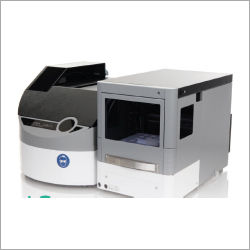
Tell us about your requirement

Price:
Quantity
Select Unit
- 50
- 100
- 200
- 250
- 500
- 1000+
Additional detail
Mobile number
Email

More Products in Laboratory Equipment Category
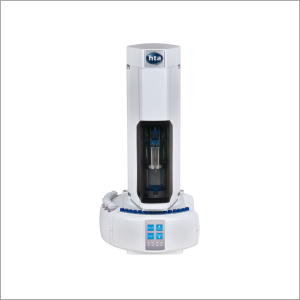
Automated Liquid Autosampler
Price Range 1000000.00 - 1500000.00 INR
Interface : USB 2.0, RS232, and Ethernet connectivity for instrument communication.
Spare Parts : Sample probe, vials, tray, and replacement tubing.
Features : Programmable sampling sequences, cleaning cycles, leak detection, and error alarms.
Theory : Other, Fully automated liquid autosampling for accurate, repeatable sample introduction in analytical instruments.
Dimensions : Approx. 45 x 35 x 40 cm (L x W x H).
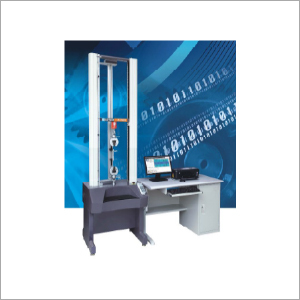
Universal Testing Machines
Price Range 1500000.00 - 2000000.00 INR
Interface : USB and RS232 interface for data transfer; fully compatible with standard PC software.
Spare Parts : Jaws, grips, load cell, extensometer, fixtures, electronics available as spare parts.
Features : Microprocessor controlled, userfriendly interface, overload protection, emergency stop, data recording and printing capabilities.
Theory : Other, Universal Testing Machines are designed to test the tensile, compression, bending, shear, and other mechanical properties of materials under controlled conditions.
Dimensions : Approx. 1000 x 600 x 2000 mm (varies with model & capacity).

Microscope
Price Range 100000.00 - 150000.00 INR
Interface : USB 2.0
Spare Parts : Replacement objectives, eyepieces, and bulbs
Features : Digital camera integration, USB connectivity, highprecision image output
Theory : Other, Optical
Dimensions : 240mm x 180mm x 390mm
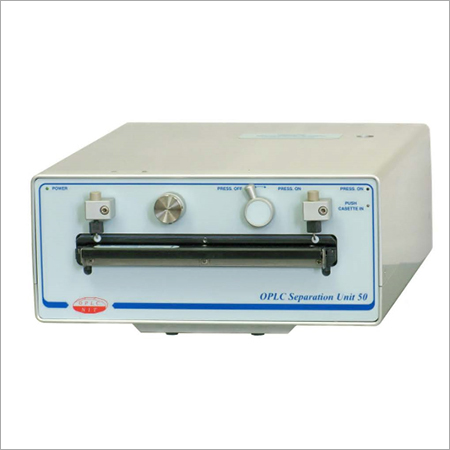
Overpressure Layer Chromatography
Price Range 1900000.00 - 3900000.00 INR
Interface : Manual control panel
Spare Parts : Replacement Orings, overpressure seals, spare TLC plates
Features : Rapid separation, reduced analysis time, efficient solvent usage, suitable for analytical and preparative TLC
Theory : Other, Utilizes overpressure to accelerate the chromatographic process, enhancing the separation of components with high resolution.
Dimensions : Approx. 45 x 30 x 25 cm

 Send Inquiry
Our Products


Office No. 253, 2nd Floor, Udyog Bhavan, Sonawala Road, Goregaon East, Mumbai - 400063, Maharashtra, India

Mr. Rajendra Barabde
(Director)
Mobile :08045803032
 Send Inquiry
 Send SMS
Developed and Managed by Infocom Network Private Limited.
