 Chat with us

Call us now :08045803032
 Send Inquiry
 Send Inquiry
Inductively Coupled Plasma Spectrometer
Inductively Coupled Plasma Spectrometer Specification
- View Head
- Dual view system (axial & radial)
- Focus System
- Motorized and software controlled focus
- Features
- Simultaneous multi-element analysis, high stability, programmable autosampler, powerful spectral software, and robust design for routine laboratory use
- Spare Parts
- Torch, cones, nebulizer, pump tubing, RF coil, sample tubing
- Theory
- Plasma Emission Spectrometry (ICP) for quantitative and qualitative multi-element analysis
- Drawtube
- Dual view (axial and radial) capability for enhanced sensitivity and flexibility
- Sensor
- High-sensitivity solid state CCD/CMOS detector array
- Resolution
- 0.007 nm FWHM (at 200 nm)
- Interface
- USB 2.0, RS232, Ethernet compatible connectivity options
- Frame Rate
- Up to 30 spectra/sec data acquisition
- Focal Distance
- 500 mm optical system focal distance
- Magnification
- Spectral magnification for precise element detection
- Dimensions
- Approx. 1200 x 750 x 700 mm (L x W x H)
- Focus Range
- Automated focus adjustment for optimal signal
- Eyepieces
- Not applicable (uses digital/camera detection only)
- Illumination
- Plasma torch light source (Argon plasma)
- Coarse Adjustment Range
- Electrically controlled sample introduction adjustment
- Fine Adjustment Range
- Programmable via software for optimal alignment
- Working Stage
- Integrated auto-sampler compatible sample stage
- Still Image Capture Resolution
- Up to 2048 x 2048 pixels (spectral imaging)
- Video Capture Resolution
- Real-time spectrum acquisition, 30 fps
- Image Format
- Digital output compatible with major analytical software
- Objective Achromatic
- High-precision polychromator optics
- Condenser
- Echelle grating with cross dispersion for high resolving power
- Light Source
- Argon Plasma torch, RF powered
- Nebulizer Gas Flow Rate
- 0.5-1.0 L/min (Argon)
- Wavelength Range
- 160 - 900 nm (full spectrum coverage)
- Compliance
- CE and ISO 9001:2015 Certified
- Background Correction
- Dynamic real-time correction
- Environmental Operating Conditions
- Ambient temperature 15-35C, humidity <80% RH non-condensing
- Sample Introduction System
- Auto-sampler with high-precision peristaltic pump and nebulizer options
- Safety Interlocks
- Torch and door interlocks, gas pressure safety cut-off, RF power interlock
- Detection Limit
- Up to ppb/ngmL1 range for most elements
- Auxiliary Gas Flow Rate
- 0-2 L/min (Argon)
- Weight
- Approx. 110 kg (without accessories)
- Cooling
- Integrated water recirculating chiller
- Plasma Gas Flow Rate
- 8-20 L/min (Argon)
- Power Supply
- 230V AC, 50/60Hz, 2.5 kW
- Operating Software
- Windows-based advanced ICP operation and data evaluation software
- RF Power Range
- 700 - 1600 W continuous adjustable
Inductively Coupled Plasma Spectrometer About
Technical specification
Plasma gas flow meter: 100-1000L/h (1.6-16L/min)
Auxiliary gas flow meter10-100L/h (0.16-1.66L/min)
Carrier gas flow meter10-100L/h (0.16-1.66L/min)
Carrier gas pressure stabilization valve 0-0.4MPa
Cooling water: Water temperature: 15-25 Flow rate >5L/min Water pressure: >0.1MPa Resistivity>1M
Technical Specifications of Optical System
Optical path: Czerny-Turner
Focal length: 1000mm
Grating specification: Ion Beam Etching Holographic Grating; The etching density is 3600 grooves/mm; the etching area is 80*110 mm.
(Alternative 2400 grooves/mm; etching area: 80*110mm)
Reciprocal linear dispersion rate: 0.26nm
Resolution: 0.008nm
Advanced Analytical Precision
Harnessing the power of an RF range between 7001600 W and precise Argon gas control, this ICP spectrometer delivers exceptional multi-element detection sensitivity. The dual-view optics maximize analytical flexibility, while the solid-state detector array ensures quantitative and qualitative accuracy for both trace and major elements.
User-Friendly Automation and Software
Featuring an integrated auto-sampler with a high-precision peristaltic pump and advanced sample introduction system, this spectrometer facilitates automated measurements for high-throughput laboratories. Windows-based ICP operation and evaluation software delivers configurable workflows and intuitive data management.
Robust Design and Safety Compliance
The built-in water chiller maintains consistent performance, and a suite of safety interlocks protects both operator and equipment integrity. Certified under CE and ISO 9001:2015 standards, this spectrometer is designed for dependable operation under variable laboratory conditions.
FAQs of Inductively Coupled Plasma Spectrometer:
Q: How does the dual-view (axial and radial) capability improve analysis with this ICP spectrometer?
A: The dual-view capability enables both axial and radial observation of the plasma, enhancing detection sensitivity and expanding the dynamic range. Axial view offers lower detection limits for trace elements, while radial view provides accuracy for higher concentrations, making the instrument suitable for a wide range of sample types.Q: What features facilitate high-throughput sample analysis in routine laboratory applications?
A: The spectrometer includes an integrated auto-sampler, high-precision peristaltic pump, programmable sample introduction, and robust spectral acquisition software. These features automate sample handling and data processing, enabling efficient, high-volume analysis with minimal operator intervention.Q: When should the real-time dynamic background correction be used during measurements?
A: Dynamic background correction is automatically applied during each analysis, ensuring that spectral interferences and matrix effects are minimized. This feature is essential for accurate and reliable measurements, especially when analyzing complex samples with overlapping spectra.Q: Where can this ICP spectrometer be used, considering environmental and regulatory requirements?
A: This instrument is designed for use in analytical laboratories, including environmental, pharmaceutical, industrial, and research labs. It operates reliably at ambient temperatures of 1535C and humidity below 80% (non-condensing), and it complies with CE and ISO 9001:2015 standards for safety and quality.Q: What is the benefit of an integrated water recirculating chiller in the spectrometer?
A: The integrated chiller maintains optimal operating temperatures for the plasma torch and electronic components, ensuring instrument stability and prolonging the lifespan of critical parts. Consistent cooling is vital for maintaining analytical accuracy during extended operation.Q: How is data transferred and processed for subsequent analysis?
A: The spectrometer offers multiple connectivity options, including USB 2.0, RS232, and Ethernet. Acquired spectral data can be output in digital formats compatible with major analytical software, allowing seamless integration with LIMS and further statistical evaluation.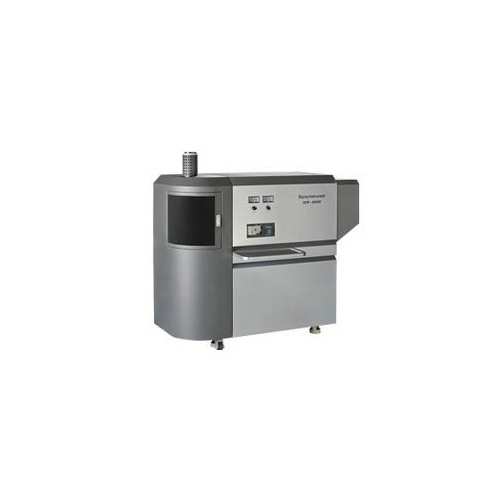
Tell us about your requirement

Price:
Quantity
Select Unit
- 50
- 100
- 200
- 250
- 500
- 1000+
Additional detail
Mobile number
Email

More Products in Analytical Instruments Category
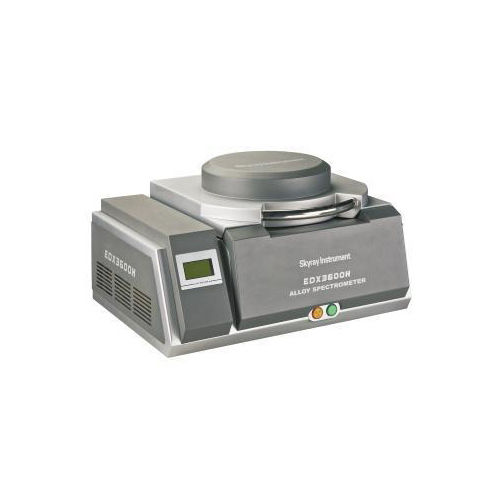
Digital Alloy Analyzer
Theory : Other, Digital Optical Emission Spectroscopy (OES)
Resolution : 1920 x 1080 pixels
Interface : USB 2.0/3.0
Sensor : High sensitivity CMOS sensor
Illumination : LED with adjustable brightness
View Head : Trinocular, 360 rotatable
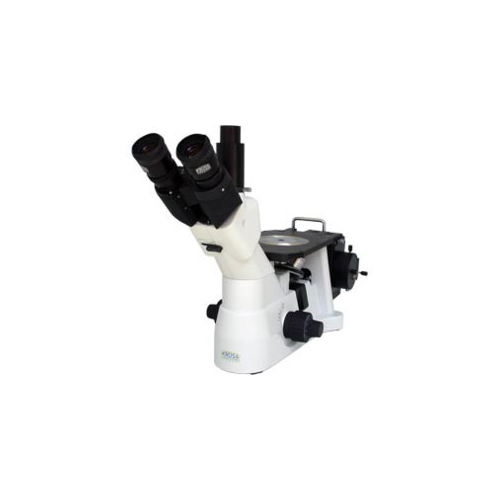
Metallurgical Microscope
Theory : Other, Inverted metallurgical microscopy leveraging reflected light optics for examination of opaque and polished metal surfaces.
Resolution : Optical: up to 2000x (dependent on eyepiece/objective used)
Interface : Camera port (Cmount adapter supported), USB (with compatible camera attachment)
Sensor : Compatible with digital cameras (optional integration)
Illumination : Khler illumination with builtin halogen lamp (6V/20W), variable light intensity control, field iris diaphragm
View Head : Trinocular head, 45 inclined, 360 rotatable
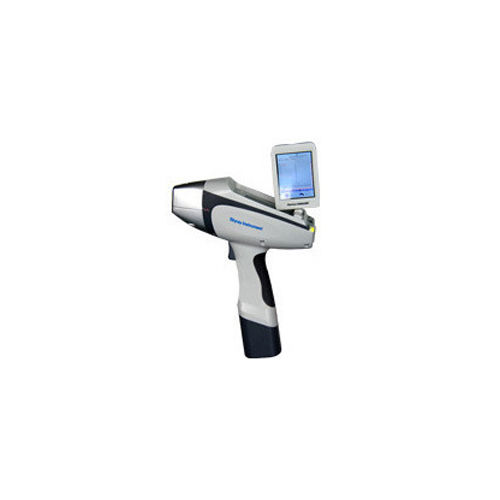
Digital Genius XRF Analyzer
Theory : Other, Not available
Resolution : Not available
Interface : Not available
Sensor : Not available
Illumination : Not available
View Head : Not available
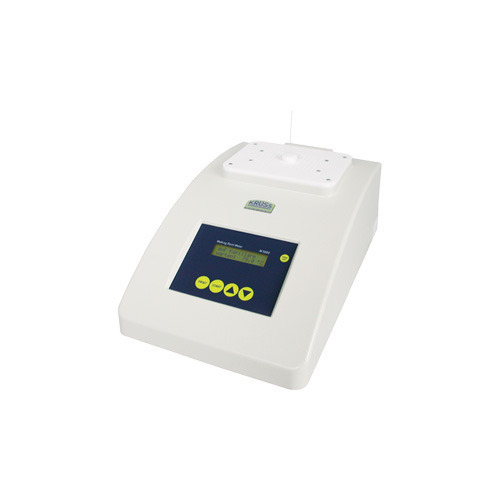
Melting Point Analyzer
Theory : Other, Capillary method with observation through magnifying lens
Resolution : 0.1C
Interface : Digital LCD display with keypad operation
Sensor : Precision temperature sensor (PT100)
Illumination : Builtin LED backlight illumination
View Head : Fixed monocular viewing head

 Send Inquiry
Our Products


Office No. 253, 2nd Floor, Udyog Bhavan, Sonawala Road, Goregaon East, Mumbai - 400063, Maharashtra, India

Mr. Rajendra Barabde
(Director)
Mobile :08045803032
 Send Inquiry
 Send SMS
Developed and Managed by Infocom Network Private Limited.
