 Chat with us

Call us now :08045803032
 Send Inquiry
 Send Inquiry
Flame Photometer
Flame Photometer Specification
- Features
- Simultaneous measurement of sodium & potassium, digital readout, easy calibration, rapid analysis, compact design
- Spare Parts
- Nebulizer, mixing chamber, ignition system spare, filters
- Focus System
- Manual, burner position and alignment
- Theory
- Flame Photometry is an analytical technique used for the determination of concentration of certain metal ions, based on their emission spectrum in flame.
- Drawtube
- Single, built-in integrated type
- Sensor
- Sensitive photodetector for flame emission measurement
- Resolution
- Up to 0.1 ppm or better depending on element
- Interface
- Digital display with simple keypad controls
- Focal Distance
- Fixed, optimized for emission collection efficiency
- Magnification
- Not applicable (emission based measurement)
- Dimensions
- Approx. 350 x 250 x 300 mm
- Focus Range
- Preset, fixed for burner alignment
- Illumination
- Not applicable (uses flame light emission)
- Coarse Adjustment Range
- Available through burner position adjustment
- Fine Adjustment Range
- Available through fine-tuning control
- Working Stage
- Sample introduction with atomizer/nebulizer
- View Head
- Direct emission detection path
- Light Source
- LPG/Air flame
- Accessories
- Comes with compressor, set of filters, standards, atomizer, and tubing
- Sensitivity
- 2 ppm for Na, 1 ppm for K (minimum detection limit)
- Power Supply
- 230V AC 10%, 50 Hz
- Safety Features
- Flame failure detector, auto cut-off
- Weight
- Approximately 12 kg
- Automatic Ignition
- Provided for flame safety
- Sample Throughput
- High speed, 60+ samples per hour
- Display
- LED digital display panel
- Calibration
- Automatic and manual, with calibration curves
- Measuring Range
- 0-100 ppm for Na and K
- Reproducibility
- 2% coefficient of variation for standard solutions
- Emission Filters
- Na, K, Ca interchangeable optical filters
Flame Photometer About
Flame Photometer is most commonly utilized for inorganic chemical analysis for determination of sodium, calcium, lithium, & potassium in samples. It works by inducing flame at constant rate whereas emitted wavelength decides color of flame which is specific to each metal ion. This photometer is completely trustworthy in nature and assures high durability. Flame Photometer is very simple to use and has ergonomic structural configuration.
Features:
- Delivers accurate results
- Perfect for analytical chemistry application
- Easy to maintain
Advanced Analytical Performance for Ion Measurement
This flame photometer seamlessly combines high sensitivity and accuracy, capable of quantifying sodium and potassium concentrations down to parts per million (ppm). It operates efficiently with over 60 samples per hour, making it ideal for laboratories requiring rapid and reliable elemental analysis. The fixed optical path and optimized focal distance contribute to consistent and reproducible results.
Intuitive Controls and Robust Safety Measures
Featuring a bright LED digital display panel and simple keypad controls, the device is user-friendly. Safety is enhanced by automatic ignition, flame failure detection, and auto cut-off features. These safeguards protect users and maintain measurement integrity during continuous operation, especially where flame stability is critical.
Comprehensive Accessories and Easy Maintenance
Supplied with a compressor, a full set of filters, calibration standards, atomizer, and tubing, the instrument is ready for immediate deployment. Spare parts such as the nebulizer and ignition system spares simplify routine maintenance, ensuring minimal downtime and reliable service over extended periods.
FAQs of Flame Photometer:
Q: How does the Flame Photometer determine sodium and potassium concentrations in samples?
A: The Flame Photometer uses flame photometry, an analytical technique where a sample is introduced into a flame, causing specific metal ions like sodium and potassium to emit light at characteristic wavelengths. The instrument detects and measures this light intensity using sensitive photodetectors, correlating it directly with the ion concentration.Q: What calibration options are available for this flame photometer, and when should calibration be performed?
A: This photometer supports both automatic and manual calibration, allowing for the use of calibration curves tailored to your sample types. Calibration is recommended at the start of each measurement session, after any maintenance, or when testing new sample batches to ensure accuracy and reproducibility.Q: Where can this Flame Photometer be effectively used, and which industries benefit most from its features?
A: It is ideal for laboratory, clinical, agricultural, and industrial settings across India that require prompt, accurate analysis of sodium and potassium levels. Industries such as water quality testing, food production, pharmaceuticals, and soil science benefit significantly from its high sensitivity and throughput.Q: What sample throughput can be expected, and how does the process work?
A: This model is designed for high productivity, processing over 60 samples per hour. The sample is atomized and introduced to the flame, where the ion emissions are detected and quantified. Efficient sample handling and rapid digital readout streamline the measurement process.Q: How do the safety features of the flame photometer enhance its operation and user protection?
A: The photometer includes flame failure detectors and an automatic cut-off system, which immediately extinguish the flame and halt operation if instability or hazards are detected. Automatic ignition minimizes user contact with the flame, and robust construction further ensures safe, reliable use.Q: What are the advantages of the interchangeable emission filters provided with the instrument?
A: Interchangeable Na, K, and Ca optical filters allow users to switch between different elemental analyses quickly and accurately without additional equipment. This flexibility increases the instruments utility for various analytical tasks.Q: What power requirements are necessary for installation, and what accessories are supplied?
A: The instrument operates with a standard 230V AC 10%, 50 Hz power supply. It comes equipped with a compressor, a full set of filters, calibration standards, atomizer, tubing, and spares for essential components, ensuring a complete analytical setup right out of the box.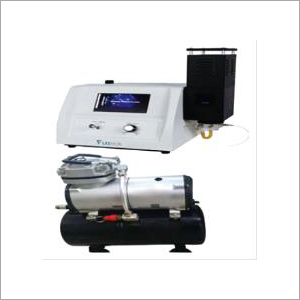
Tell us about your requirement

Price:
Quantity
Select Unit
- 50
- 100
- 200
- 250
- 500
- 1000+
Additional detail
Mobile number
Email

More Products in Laboratory Equipment Category

Microscope
Price Range 100000.00 - 150000.00 INR
Working Stage : Double Layer Mechanical Stage with XY controls
Dimensions : 240mm x 180mm x 390mm
Features : Digital camera integration, USB connectivity, highprecision image output
Interface : USB 2.0
Resolution : 640 x 480 pixels
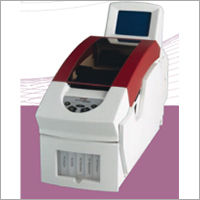
CFA Analyzer
Price Range 6000000.00 - 8000000.00 INR
Working Stage : Mechanical doublelayer, size 140140 mm, movement 7555 mm
Dimensions : 380180350 mm
Features : Live viewing, HD video output, digital imaging, ergonomic design
Interface : USB 2.0 & HDMI
Resolution : 19201080 pixels
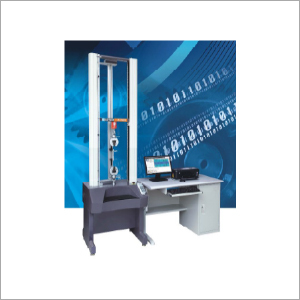
Universal Testing Machines
Price Range 1500000.00 - 2000000.00 INR
Working Stage : Heavyduty precisionmachined stage with customizable grips and fixtures.
Dimensions : Approx. 1000 x 600 x 2000 mm (varies with model & capacity).
Features : Microprocessor controlled, userfriendly interface, overload protection, emergency stop, data recording and printing capabilities.
Interface : USB and RS232 interface for data transfer; fully compatible with standard PC software.
Resolution : Load resolution up to 1/50,000 of capacity; displacement resolution of 0.01 mm.
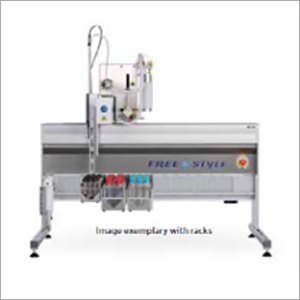
FREESTYLE - Automated Sample Preparation System
Price Range 5000000.00 - 6000000.00 INR
Working Stage : Automated XYZ platform
Dimensions : Approx. 900 x 600 x 800 mm
Features : Fully automated liquid handling, programmable workflow, barcode reading, precise dispensing, compatible with various vessels
Interface : Touchscreen display, USB and LAN connectivity
Resolution : Microliter precision for liquid handling

 Send Inquiry
Our Products


Office No. 253, 2nd Floor, Udyog Bhavan, Sonawala Road, Goregaon East, Mumbai - 400063, Maharashtra, India

Mr. Rajendra Barabde
(Director)
Mobile :08045803032
 Send Inquiry
 Send SMS
Developed and Managed by Infocom Network Private Limited.
